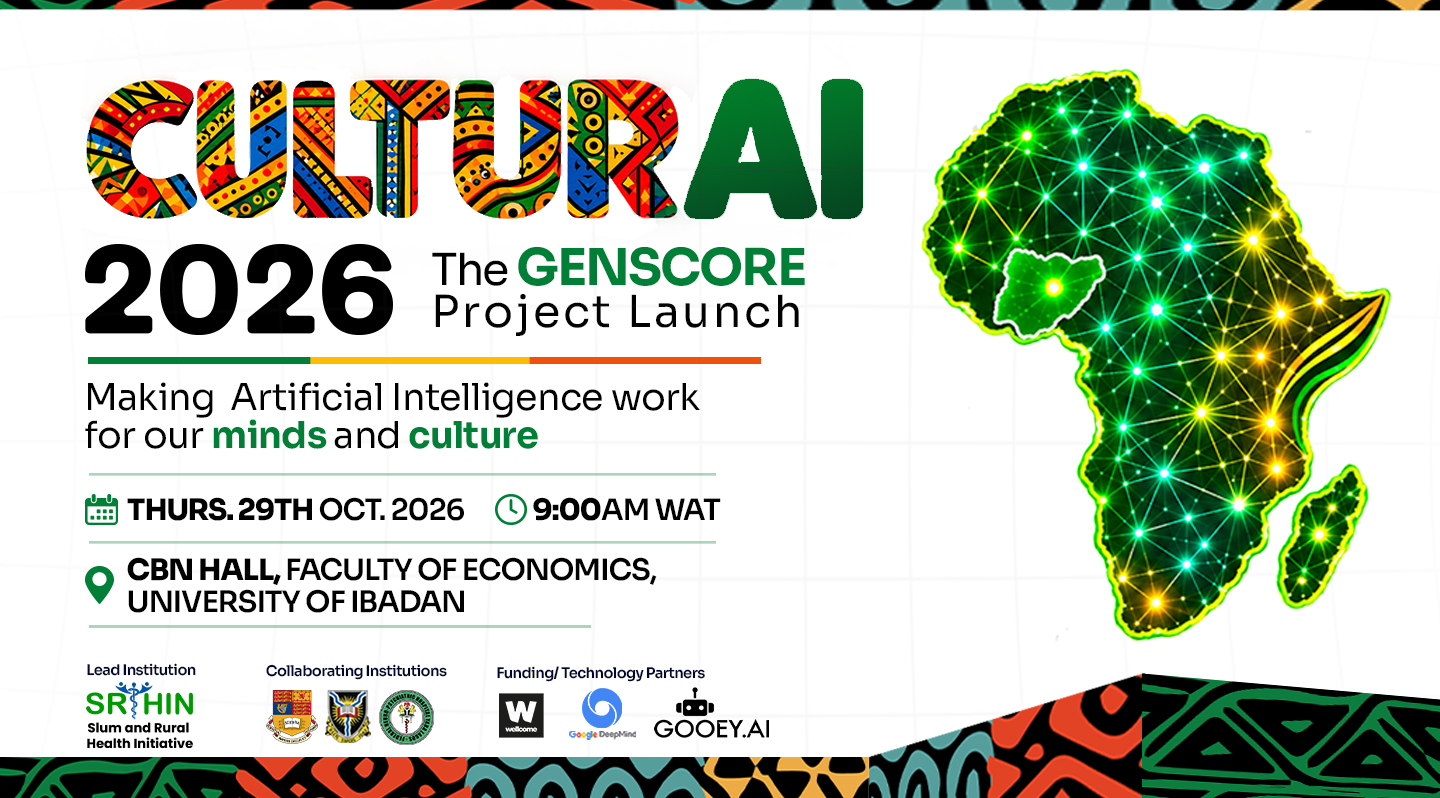
Nigeria has roughly one psychiatrist for every million people. Genscore screens for depression and anxiety in the three languages Nigerians think in, and it reads how you speak, not just what you tick.
The PHQ-9 and GAD-7 were written in English, for the West. Translate them word for word and the questions survive the journey. The meaning doesn't.
In Nigerian clinics, depression often arrives as “heat in the head” or crawling skin. The form asks whether you feel down, and the answer is no.
In Yorùbá, àìsùn is heavier than “trouble sleeping”. Render it literally and the score shrinks with the sentence.
In Hausa, hopelessness often sounds like fate or prayer. No PHQ-9 item is listening for it, so it scores as nothing at all.
Nine in ten Nigerians with a mental health condition receive no care. Recognition fails long before treatment gets its chance. Genscore starts there.
Communities shape the corpus. Clinicians write the rules. Blinded psychiatrists mark the exam.
Thousands of hours of consented voice and story, collected with lived-experience groups across three languages and curated through Gencurate, our data engine.
An open-source model fine-tuned on that corpus, trained to deliberate over clinician-written clinical and ethical rules before it produces a single assessment.
GenPHQ and GenGAD: assessment items written in the local idiom by the model, then refined in consensus workshops with psychiatrists and people with lived experience.
Validated with 3,600 participants across three states and benchmarked against blinded SCID-5-CV interviews. If it can't outperform the translated originals, it doesn't ship.
Clinicians rank the model's answers pair by pair, and it learns to prefer what a good doctor would say. No score ships without a human signature.
Gencurate is the platform every voice note, interview and narrative passes through before it is allowed anywhere near the model: consent checked, context tagged, clinician approved.
Distress leaves traces in speech before anyone reports a symptom. Genscore fuses what people say with how they say it, and adapts the next question in real time.
A tool people trust with their minds has to show its working. Every claim gets benchmarked, audited and published.
Diagnostic accuracy tested against SCID-5-CV interviews, with sensitivity, specificity and ROC curves published in full.
A Data, Ethics and Safety Monitoring Board spanning AI ethics, global mental health and Nigerian law, with regular bias audits.
An open-source model and an open Ethical Charter, so any LMIC health system can adapt the framework instead of licensing it.
Multi-dimensional Item Response Theory and adaptive testing cut diagnostic error and shorten assessments without losing precision.
A Lived Experience Working Group reviews every tool, through 18 co-design workshops mapping local idioms to DSM-5 and ICD-11.
Clinician-authored guidelines govern how the model handles suicidal ideation, spiritual idioms and referral before anything ships.
Genscore is proving that artificial intelligence can be inclusive, highly ethical, and deeply grounded in cultural relevance.
Hours of deeply nuanced voice data and localized diagnostic language expressions mapped into our platform engine.
The absolute first culturally native screening layout validated completely using community validation workflows.
Functional framework instances actively handling and screening localized vocal samples along with standard textual inputs.
Established standalone panels driving iterative co-design focus operations across Hausa, Yorùbá, and Pidgin ecosystems.
Pioneered dynamic safety protocols handling complex somatic idioms, escalations, and clinical oversight pathways securely.
Strategic infrastructure investments and clinical frameworks validation networks powering our speech diagnostics matrix.

Funders, researchers, clinicians, health systems: if you want screening that works in the languages people actually speak, talk to us.
The decade goal: the foundation of Africa's largest culturally grounded mental health AI, in service of a billion people.